Tattoo

What is Tattoo Removal?
A tattoo can mean a lot at the time and feel very different years later. Some people want an old design gone, others want a faded or badly placed one lightened, and some simply want a clean slate before a new piece or a new job.
Removal is not one-size-fits-all. Small, dark tattoos and large, colourful ones behave very differently, and the skin they sit in matters too. Laser treatment can fade a tattoo gradually, and a consultation shows what is realistic for yours.
How Tattoo Removal Works
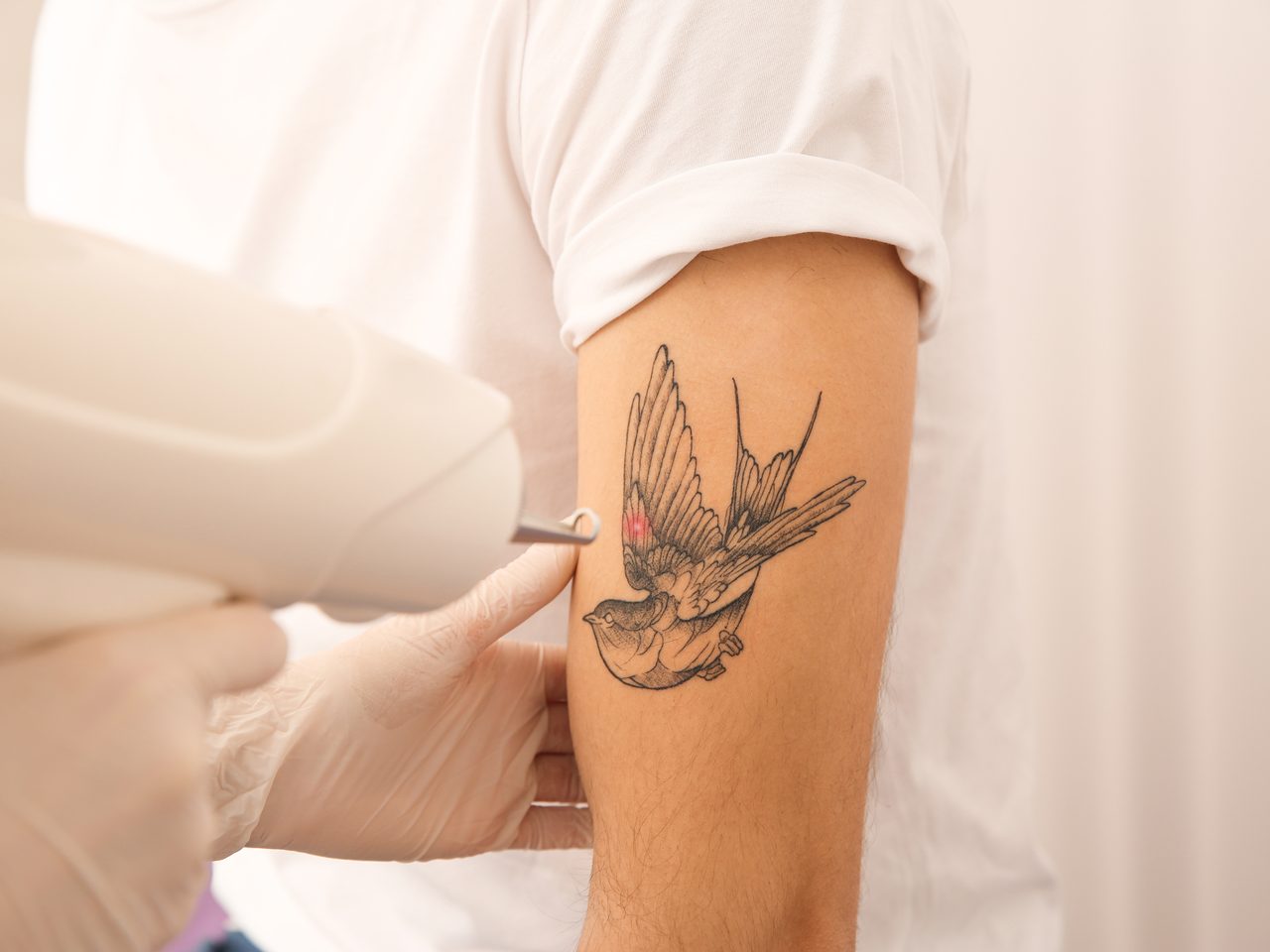
Tattoo ink sits in the dermis, the layer below the skin's surface, where the body cannot easily clear it. That is why a tattoo stays put for life. A laser sends ultra-short bursts of energy into the skin. The ink absorbs the energy and breaks into tiny particles, which the body's own systems can then clear away over the following weeks.
Why some tattoos are harder to remove depends on a mix of factors, including:
- Ink colour: Black and dark inks absorb laser energy most readily and often fade first. Green, yellow and some brighter colours can be harder and may need more sessions.
- Depth of the ink: Ink placed deeper is more work to break up, which is often the case with heavy, professionally done tattoos.
- Age of the tattoo: Older tattoos have usually had time to fade and disperse, so they often respond more easily.
- Amount of ink: Dense, solid areas and layered designs take longer than fine lines.
- Skin type: How strongly the ink stands out against your natural skin tone affects how easily the laser picks it out.
- Location on the body: Where the tattoo sits can influence how quickly the body clears the ink.
The number of sessions varies, and the results do too. A tattoo may lighten well, and some ink may remain.
Treatments for Tattoo at ARTÉ
The right plan depends on the ink, the skin and your goals. It starts with a consultation with Dr. Michelle.
Laser Tattoo Removal
Laser Tattoo Removal uses ultrashort pulses to shatter ink into microscopic particles your body can clear. Dr. Michelle first assesses the tattoo's size, colours, depth, age and location, then plans a course of gradual sessions. Fading is often noticeable after the first few sessions, with edges softening as treatment continues.
Discovery Pico Laser
This is a picosecond laser, delivering energy in extremely short bursts that break pigment into fine particles. Tattoo removal is one of its uses, alongside pigmentation and skin texture concerns. It suits people who want a laser that works in the deeper layers without harming the surface, with settings tailored to the tattoo.
Possible side effects: Redness, swelling, tenderness, tiny crusts or scabs are common and usually settle, and some people notice blistering. Changes in skin colour can occasionally occur. A consultation is needed first, and results vary from person to person.
Frequently Asked Questions
Does tattoo removal hurt?

Most people describe brief, sharp snaps, often compared to a rubber band. Numbing cream goes on first to keep you comfortable, and each session is usually short.
How many sessions will I need?
It varies. Small, dark or older tattoos often need fewer sessions, while large, colourful or deeply placed ones need more. Sessions are spaced weeks apart so your skin can heal and your body can clear the ink.
Can every colour be removed?
Many colours can be lightened, but not all respond equally. Dark inks tend to fade first, and colours such as green and yellow can be stubborn. Dr. Michelle will tell you what to expect for your design.
Will it leave a scar?
Careful technique and good aftercare help protect the skin, though no laser treatment is entirely risk free. Temporary blistering or scabbing can happen, and pigment changes are possible. Avoid picking at scabs and follow the aftercare advice given.
Will the tattoo disappear completely?
Some tattoos fade to almost nothing, while others leave a faint shadow. Tattoo age, ink type, colour and skin type all play a part, so results vary.
What should I do after a session?
Keep the sun off the area and use a broad-spectrum SPF daily. Skip heavy workouts, chlorinated pools and strong friction for the first week, and hold off on retinoids and acids for a few days. Dr. Michelle will give you full aftercare guidance.
Why Choose ARTÉ by Dr. M for Tattoo?

Doctor-Led Care
Dr. Michelle Ng carries out every consultation and every treatment herself, never passing them on to another practitioner. Having practised aesthetic medicine for over a decade, she understands how laser energy behaves in skin.

A Plan for Your Kind of Tattoo
Every tattoo is different. Dr. Michelle looks at its colours, depth and age, and at your skin, before choosing a laser and settings. Removing ink gradually is how we aim to protect the skin around it.

Natural-Looking Results
The aim is skin that looks like yours again, with tattoo fading that is gradual and even rather than harsh. Some ink may remain, and Dr. Michelle will be open about what is likely.

Safety-First Approach
Every plan begins with a thorough consultation and is supported by clear aftercare.
Book Your Tattoo Consultation at ARTÉ by Dr. M
Thinking about fading a tattoo? Bring it in for an assessment, and Dr. Michelle will walk you through what may be possible and how many sessions it could take.
Book a ConsultationThis page is for general education and is not medical advice. Dr. Michelle will assess your concern at a consultation and advise on the treatment that suits you.