There comes a point when the mirror stops offering the reassurance it once did. A softness where there was once definition, a tiredness the skin holds even after rest, a photograph that does not quite match the way one feels inside. For many women, this is the moment the vocabulary of aesthetic medicine begins to enter the search bar: skin rejuvenation, energy treatments, lasers, microneedling, IPL.
The results, more often than not, are overwhelming. Every clinic offers a different menu. Every device promises transformation. Every treatment name sounds both essential and interchangeable with the next. And in that overwhelm sits the most common mistake of this stage: choosing the wrong treatment for the actual concern, then quietly concluding that aesthetic treatments do not work.
We've thus written this article to bring some order to that confusion. By looking at what is actually changing beneath the skin as it ages before we talk about the treatments that meaningfully address each concern, and those that do not, we can bring some clarity to a category too easily obscured by its own vocabulary. We then set out where the InMode platform of energy-based treatments sits within that landscape, and how we approach skin rejuvenation at ARTÉ by Dr. M.
First, What is “Skin Rejuvenation”?
Skin rejuvenation can be best understood as an umbrella term rather than a single treatment. It covers the broad category of non-surgical aesthetic treatment approaches designed to improve the appearance and quality of ageing skin, and within it sit tightening, resurfacing, brightening, smoothing, and remodelling. Each of these addresses a different concern, and each works at a different depth of the skin.
This is where the confusion often begins. The word "rejuvenation" suggests one outcome, but the treatments that produce it work in very different ways. A treatment that resurfaces the skin's surface does not reach the structural foundation that governs firmness. A tightening treatment that stimulates collagen in the deeper dermis does not address surface pigmentation. Understanding what a treatment does and where in the skin it does it allows the right choice to be made.
The most refined outcomes tend to come not from a single device or a single session, but from a considered plan built around the concerns the face is actually presenting.
How Skin Actually Ages: The Foundations Worth Knowing
To understand which treatments work, it helps to understand what is quietly happening beneath the surface. Ageing is a layered process, and different layers change at different rates and for different reasons.
The two proteins most often named are collagen and elastin. Collagen gives the skin its firmness and structure. Elastin gives it the ability to snap back after movement. From the late twenties onward, both begin to decline in production, and the decline compounds over time. The result is not a sudden change but a slow shift: skin that no longer holds itself in quite the same way.
Structurally, the skin sits in three broad layers. The epidermis, at the surface, governs tone, texture, and pigmentation. The dermis, in the middle, holds the collagen and elastin scaffold that keeps the skin firm and resilient. Beneath both sit the subcutaneous fat pads and the SMAS layer, the deeper structural foundation that carries the face and defines its contours. Treatments that address surface concerns rarely reach the deeper layers, and treatments that address structure rarely make a visible difference to surface tone. This is why a considered plan tends to outperform a single treatment repeated in isolation.
Ageing is also shaped by more than time. Sun exposure accelerates collagen breakdown and drives most pigmentation concerns. Hormonal changes influence how the skin holds moisture. Lifestyle, sleep, and stress leave their own quiet impressions while genetics set the pace beneath all of it. Because these factors combine differently in every face, ageing presents differently in every person. A bespoke approach, personalised to what the individual face is actually presenting, is what produces refined results.
The Major Concerns of Ageing Skin and What Actually Works
Rather than treating ageing as a single concern, it helps to look at the specific ways it presents. The sections below cover the most common concerns we see, what is happening beneath the surface in each case, and which treatment approaches address them meaningfully.
Fine Lines and Wrinkles
Fine lines and wrinkles are among the earliest visible signs of skin ageing, and they arrive from more than one direction. Some are the result of years of expression, the smiling, frowning, and everyday animation of the face that settle over time around the eyes, forehead, and mouth. Others are the result of collagen and elastin loss in the dermis, which leaves the skin less able to hold its own smoothness. Others still are surface-level and driven by dehydration in the skin's upper layers.
What works depends on which of these mechanisms is producing the lines.
- Neuromodulators: Soften the movement-based lines by reducing the underlying muscle contraction that etched them in.
- Skinboosters: Improve hydration in the upper dermis, which can soften finer, more superficial lines.
- Collagen-Stimulating Treatments: Such as radiofrequency and radiofrequency microneedling, address the deeper structural loss that allows lines to settle in the first place.
Surface creams alone, however sophisticated, cannot reach the layer where the more established lines actually live.
Within the InMode platform, two treatments sit within this concern.
Morpheus 8 combines microneedling with radiofrequency energy. The fine needles create controlled micro-channels into the skin, while the radiofrequency energy is delivered directly into the deeper dermis, triggering a collagen and elastin response that can soften more established wrinkles from beneath the surface.
Forma works without needles, delivering bipolar radiofrequency that gently heats the dermis to a precise therapeutic temperature. This stimulates collagen production over time and tends to work particularly well on finer, earlier lines and as ongoing maintenance.
Morpheus 8 typically requires a short series of sessions with some downtime, while Forma is a no-downtime treatment that can be repeated more frequently. The two are often paired in a considered plan, with Morpheus 8 addressing more established wrinkles and Forma maintaining the result between sessions.
Sagging and Skin Laxity
Sagging is one of the concerns most often searched under the umbrella of a skin tightening treatment, but it also tends to be among the most misunderstood. What appears as sagging is usually the visible outcome of two related changes beneath the surface: the collagen scaffold in the dermis weakening, and the SMAS layer beneath it, the deeper structural foundation that carries the face, losing some of its capacity to hold everything in position. The jawline softens. The neck begins to change. The face becomes less defined.
The treatments that meaningfully address this concern are those that reach the layer where the concern actually lives. Energy-based treatments that deliver radiofrequency or ultrasound into the deeper dermis and SMAS stimulate collagen contraction and remodelling, while biostimulator injectables gradually rebuild the collagen scaffold from within over months. Skincare marketed as "lifting" cannot reach these layers, and treatments that act only at the surface tend to disappoint when the bigger structural change is what is driving the concern.
The InMode platform offers three modules that sit within this category, layered by depth.
Forma uses bipolar radiofrequency to gently heat the dermis to a controlled therapeutic temperature, triggering immediate collagen contraction and longer-term collagen production. It addresses early, surface-level laxity with no downtime, which makes it well suited to maintenance.
MiniFX combines radiofrequency with mild suction, allowing the device to lift and treat smaller, more contoured areas of the face. It is particularly suited to the lower face, jawline, and submental region beneath the chin, where definition is often lost first.
Morpheus 8 reaches the deepest of the three. By delivering radiofrequency energy through microneedles into the deeper dermis and subdermal layers, it addresses more established laxity through structural collagen remodelling rather than surface tightening alone.
The three are often layered into a considered plan: Morpheus 8 for deeper structural work, MiniFX for sculpting the lower face and jawline, and Forma for ongoing maintenance between sessions.
Volume Loss
Volume loss is often mistaken for sagging, and the distinction matters because the treatment for one is not the treatment for the other. As the face ages, the fat pads that once sat plumply in the cheeks, temples, and around the mouth gradually thin. The bone beneath also resorbs quietly over decades, particularly along the jaw and around the eye sockets. The result is a face that appears to be descending, when in fact it is losing the structural cushion that once held it up.
Tightening treatments alone cannot address this. Even the most considered energy-based work can only redistribute the tissue that is already there. When the underlying volume has genuinely been lost, restoration requires either replacing it directly, through dermal filler injections placed with precision along the areas of loss, or rebuilding the structural scaffold over time through biostimulators such as calcium hydroxylapatite, poly-L-lactic acid, polycaprolactone, or polydioxanone. As these are prescription-only treatments, both approaches call for the judgement of a qualified doctor and a proper consultation to determine whether they are appropriate for the individual concern.
Distinguishing between sagging and volume loss is a matter of clinical judgement rather than a checklist. Both concerns can present in the same face, sometimes in the same region, and a considered plan often addresses them together in sequence: rebuilding structural support first, then tightening or refining around it. The most common mistake at this stage is to pursue tightening for a concern that is actually volume-based, and to conclude that nothing has worked when in fact the wrong tool was applied.
Pigmentation and Uneven Skin Tone
Pigmentation is one of the most visually obvious signs of skin ageing, and one of the more nuanced concerns to treat well. It arrives in several forms. Sun damage produces the small brown patches often called age spots or solar lentigines. Melasma appears as more diffuse patches, typically across the cheeks, forehead, or upper lip, and is strongly influenced by hormones and light exposure. Post-inflammatory hyperpigmentation lingers after breakouts or irritation. Overall dullness reflects a slower rate of surface cell turnover.
What works depends on the type of pigmentation present, and this is where careful assessment matters more than the choice of device. Light- and laser-based treatments calibrated to the specific type of pigmentation can lift sun damage and even out overall tone. Topical pigment-suppressing actives, when used consistently, can support the result. Daily sunscreen is not optional; without it, any pigmentation work is undone by the very exposure that caused the concern in the first place.
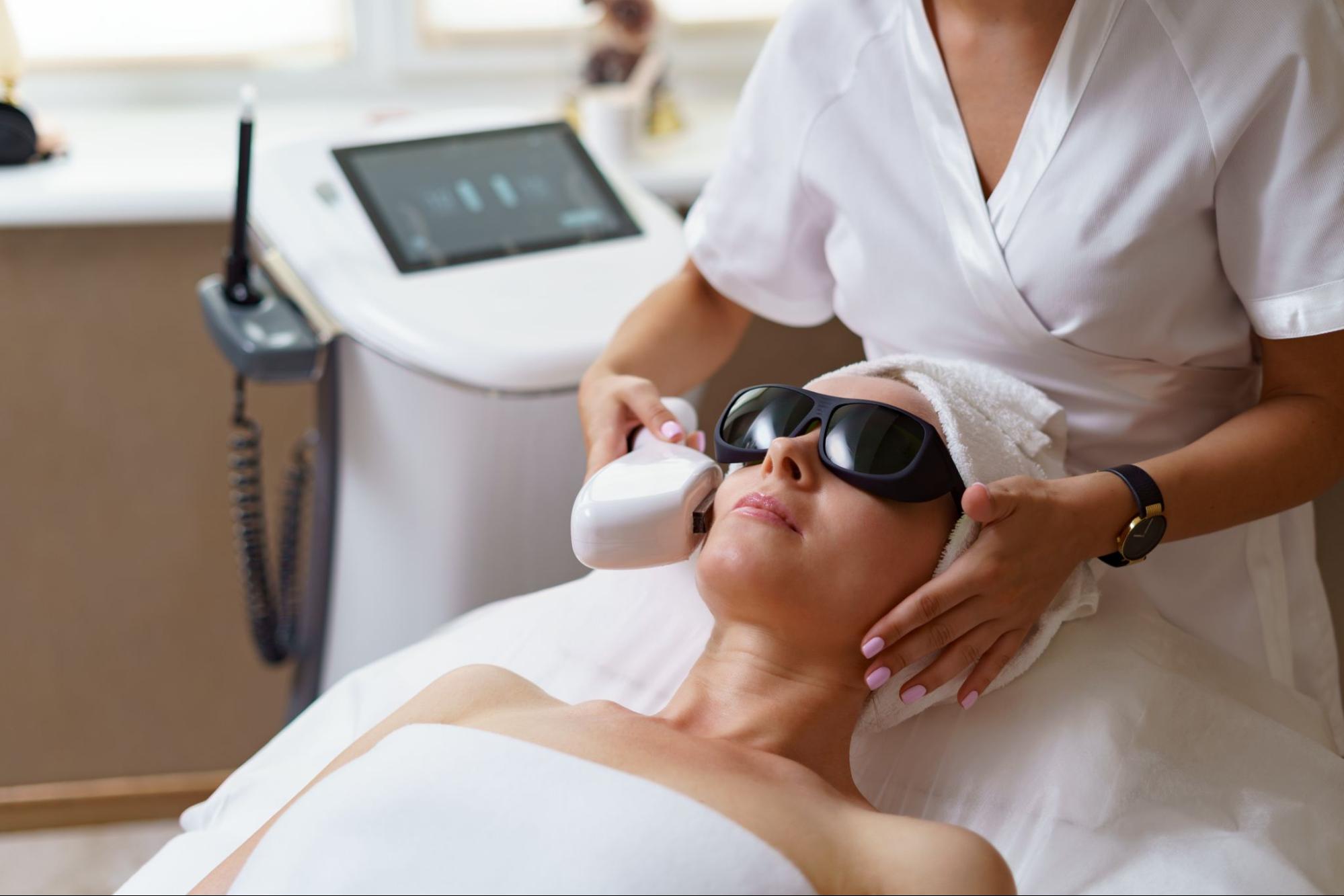
Within the InMode platform, Lumecca IPL addresses this category. Lumecca uses intense pulsed light, which delivers a broad spectrum of light wavelengths in a single pulse. That light energy is absorbed by pigment in the skin, breaking it down so the body can clear it naturally over the following days and weeks.
Because IPL covers a range of wavelengths rather than a single one, Lumecca can address both pigment and superficial vascular concerns such as redness and small broken capillaries in the same session, which makes it well suited to overall tone work rather than a single spot. Lumecca is also calibrated to deliver higher peak power in shorter pulses than older IPL devices, which can translate to more visible improvement in fewer sessions.
There is one important caveat, particularly for Asian skin. Melasma responds poorly to heat-driven light treatments and can worsen when treated with the wrong protocol. A proper consultation should thus distinguish between the types of pigmentation present before any IPL session is planned. Lumecca is best suited to sun spots, freckles, and overall tone improvement, while melasma is typically addressed with a different, more carefully considered protocol.
Surface Texture, Pores, and Acne Scars
Surface concerns often cluster together. Enlarged pores, roughened texture, and the indented scars left by past breakouts frequently share the same underlying cause: collagen loss and structural change in the dermis. Skincare can support the surface of the skin, but the concerns that live in the deeper dermis rarely resolve from creams alone.
What works at this depth is resurfacing and remodelling.
- Ablative and Non-Ablative Lasers: Resurface the upper layers of the skin and stimulate collagen production.
- Radiofrequency Microneedling: Combines mechanical stimulation with energy-based collagen remodelling.
- Exfoliating actives: Consistent use of exfoliating actives such as retinoids and acids can support ongoing renewal at the surface.
Morpheus 8 sits within this category on the InMode platform. Its combined mechanism is what makes it particularly well suited to acne scarring and texture. The microneedling element creates controlled micro-channels into the skin, triggering the body's natural wound-healing response. The radiofrequency energy delivered through the needle tips then heats the deeper dermis, stimulating a stronger collagen and elastin response than microneedling alone.
This combined effect matters for scarring in particular. Atrophic, or indented, scars sit in the deeper dermis, beyond the reach of most surface resurfacing. Morpheus 8 can remodel the tissue at the depth where the scar actually lives. The depth of treatment is adjustable, which means the same device can address finer surface texture and enlarged pores at shallower settings, or more established scarring at deeper ones. Treatment is typically done in a short series of sessions, with results developing progressively over several months as the new collagen matures.
Dullness and Loss of Glow
Dullness is rarely the result of a single cause. It is the cumulative effect of uneven tone, mild background redness, superficial sun damage, slowed surface cell turnover, dehydration in the upper dermis, and the way light reflects off skin that is not at its smoothest or most hydrated. What patients describe as a loss of glow is often a layered concern hiding behind a single word.
For this reason, the treatments that address dullness well tend to be the ones that work on more than one contributor at a time. Light- and laser-based treatments improve tone and even out pigmentation. Hydrating skinboosters restore water content in the upper dermis and improve how the skin refracts light. Professional medi-facials support surface renewal. Exfoliating actives in a daily routine keep the surface from accumulating the dead cells that dull it.
Lumecca IPL contributes to this outcome on the InMode platform. By targeting both pigment and superficial vascular concerns in the same session through broad-spectrum light, it lifts overall tone and clarity rather than treating a single spot, which is often what patients are actually asking for when they search for glow treatments. Results typically develop over the days and weeks following each session, with skin appearing progressively brighter and more even.
Lumecca is usually most effective as part of a broader plan that also addresses hydration and surface texture. Glow, in our experience, is a layered outcome rather than a single-treatment result.
The InMode Platform: One system, Multiple Solutions
Each of the InMode treatments named above is part of a single integrated platform. Rather than a collection of unrelated devices, InMode is a non-invasive system with interchangeable handpieces, allowing several energy modalities to be delivered through one architecture: radiofrequency at varying depths, radiofrequency with microneedling, radiofrequency with suction, and intense pulsed light.
This means a clinic operating the InMode platform can layer treatments cohesively across a plan, addressing multiple concerns at multiple depths under one roof and, ideally, under the eye of the same practitioner. It also means the modules have been designed to work in concert rather than in isolation.
A brief recap of the four modules covered above:
- Morpheus 8 delivers radiofrequency energy through microneedles into the deeper dermis, addressing more established lines, laxity, texture, and atrophic scarring through structural remodelling.
- Forma delivers bipolar radiofrequency to the dermis without needles, addressing early laxity and finer lines with no downtime, and is well suited to maintenance.
- MiniFX combines radiofrequency with mild suction, sculpting smaller and more contoured areas of the lower face, jawline, and submental region.
- Lumecca IPL delivers broad-spectrum intense pulsed light for pigmentation, redness, and overall tone improvement.
A platform-based approach appeals to us for a straightforward reason. Ageing itself is layered. The most refined outcomes tend to come from treatments that work together across depths and concerns, and from a plan that reads the whole face rather than one concern at a time.
Skin rejuvenation at ARTÉ by Dr. M
At ARTÉ by Dr. M, we offer the full InMode platform, including Morpheus 8, Forma, MiniFX, and Lumecca IPL, as part of a wider menu of considered, art-led aesthetic medicine. As a medical aesthetic clinic, our approach to each treatment is grounded in the same principle: that ageing presents in layers, and the most refined results come from reading the whole face before choosing any single device.
The InMode platform supports this way of working. Multiple modalities under one roof allow us to build cohesive, layered plans that address complexion, structure, and definition together rather than in isolation. Each module is calibrated for the skin types most commonly seen in Singapore, and each is chosen for a specific concern rather than deployed as a default.
Every treatment plan begins with a proper reading of the face, unhurried, and grounded in what the individual concern is actually asking for. Some patients arrive with a specific device in mind. Others arrive knowing only that something has shifted and they would like to think about it clearly. Both are welcome, and both are met with the same intention: to understand the concern before proposing the treatment.
Underlying all of it is our founding philosophy, that beauty is revealed rather than manufactured. The finest aesthetic work should support what the face already is, quietly and precisely, rather than impose something on it. Skin rejuvenation, approached this way, becomes less about intervention and more about restoration.
If this approach resonates with you, we would be glad to explore it further in a personal consultation with Dr. Michelle.