
There comes a point where the changes in the face feel less like surface dryness and more like something structural has quietly shifted. The jawline is a little softer. The neck holds itself differently. Skincare, which once felt sufficient, no longer seems to address the problem.
At this stage, most women begin researching, and the search for answers often surfaces three names: Ultherapy, HIFU, and XERF. While all three are non-surgical and work by stimulating the body's own collagen response, they are not the same treatment, and understanding the differences can help you make an informed choice on which is right for you.
Why Skin Loosens in the First Place
To understand how any skin-tightening or lifting treatment works, it helps to understand what is changing in the skin and where.
Collagen and elastin are the structural proteins that give skin its firmness and resilience. Collagen provides the scaffolding that holds everything in position, while elastin allows the skin to return to its resting state after movement. From the late twenties onward, the body's collagen production declines by approximately one per cent each year. This is not a dramatic event but rather a gradual diminishing, and for some time, the skin compensates well enough that the change remains invisible.
The deeper story, however, is structural. The face is composed of multiple layers, each contributing to how it holds its shape over time. The dermis, sitting directly beneath the epidermis, houses much of the skin's collagen and elastin matrix. Below the dermis lies a layer of subcutaneous fat that provides volume and contour. Beneath that is the SMAS, the superficial musculoaponeurotic system, a dense connective tissue layer that sits above the facial muscles and is the layer surgeons tighten in a surgical facelift. As collagen and elastin in and around the SMAS diminish over time, this structural foundation gradually loses its capacity to hold the face in its natural position, producing the gradual, cumulative changes that can feel so difficult to name until they are already well underway.
This is why the layer being treated matters as much as the technology being used. A treatment that works only at the dermal level will address surface quality but cannot produce structural lifting.
This is also why topical products, however well-formulated, cannot fully address structural laxity. Creams and serums are designed to work at the level of the epidermis and upper dermis, but they cannot penetrate to the SMAS, and they cannot stimulate the kind of deep collagen remodeling that structural lifting requires.
Each of the three treatments discussed here works toward the same fundamental aim: delivering controlled stimulation to specific layers of tissue, prompting the body's own collagen production. Where they differ meaningfully is in how precisely each device does this, at what depth, with what level of clinical control, and with what evidence to support it. Let’s begin the comparison with Ultherapy.
What Is Ultherapy?
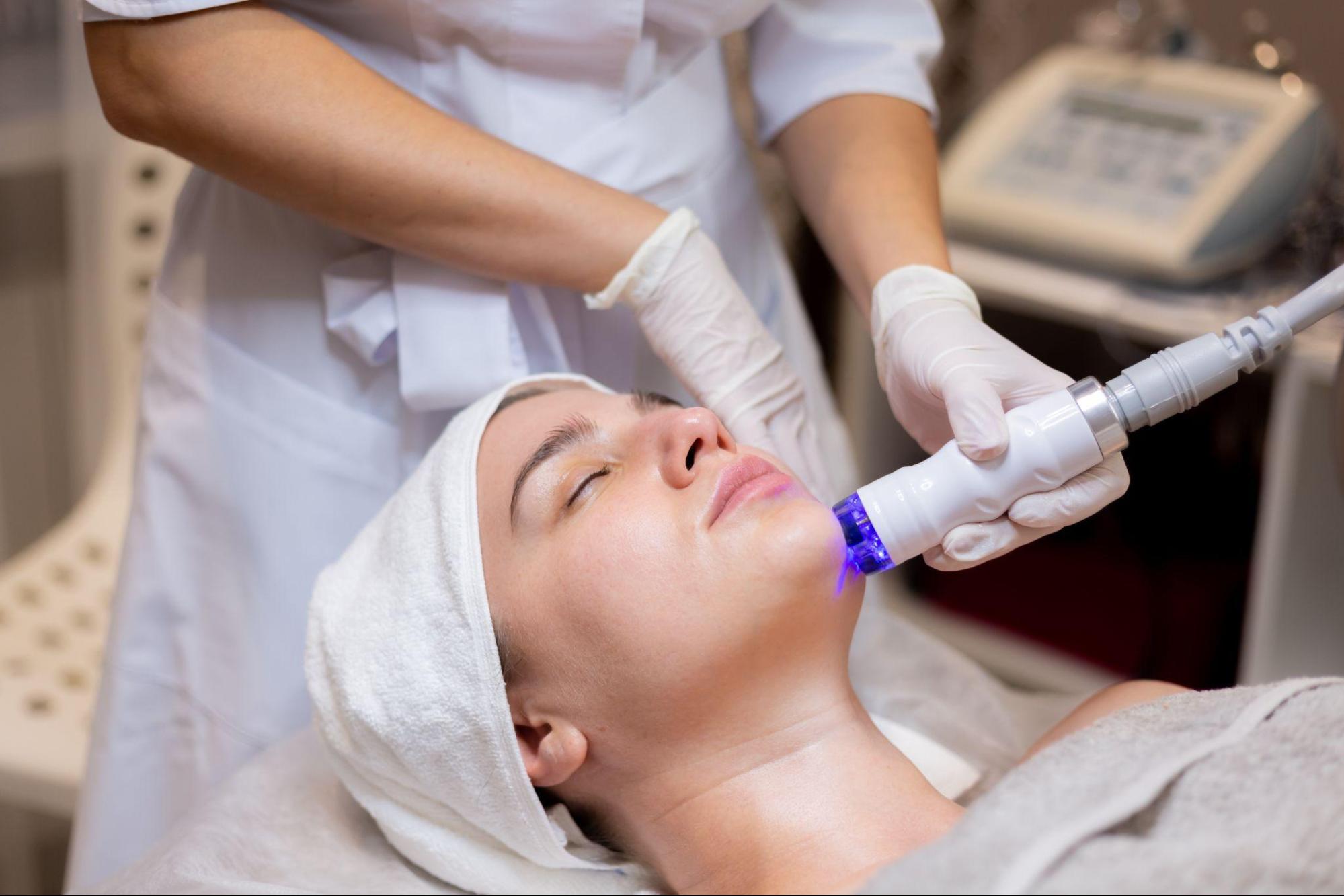
Ultherapy builds collagen and elastin by delivering Micro-Focused Ultrasound with Visualisation (MFU-V) at precise points to specific tissue and depths. This generates heat at the target site and triggers a natural repair response, which stimulates the production of new collagen and elastin, gradually rebuilding the structural support that has diminished over time.
The phrase "with visualisation" is clinically significant and worth understanding clearly. Ultherapy incorporates real-time imaging, allowing the practitioner to see the layers being treated as the treatment is delivered. This is the clinical basis for what distinguishes Ultherapy from other ultrasound-based options: when energy is directed toward tissue as structurally sensitive as the SMAS layer, the ability to confirm precisely where that energy is landing has direct relevance to both safety and outcome. Real-time imaging removes the element of estimation from the process: the practitioner can see the tissue being targeted, confirm the depth of delivery, and adjust accordingly.
Ultherapy treats at three depths: 1.5mm, targeting the upper dermis; 3.0mm, targeting the deeper dermis and subcutaneous tissue; and 4.5mm, targeting the SMAS layer directly. This depth range allows Ultherapy to address structural issues in addition to surface tightening. Indicated concerns include brow ptosis, jawline softening, neck laxity, and décolletage tightening, and a session typically takes between thirty and sixty minutes, depending on the areas addressed, with no incisions and no required recovery period.
Ultherapy Prime is the latest generation of the platform, offering a wider treatment area per pass, faster energy delivery, and improved patient comfort compared to earlier systems. The underlying clinical mechanism, MFU-V with real-time imaging at validated tissue depths, however, remains unchanged.
What patients experience after the session reflects that consistency. Results develop gradually: the initial lift is often noticeable at two to three months as the collagen response progresses, with full remodelling typically completing at around six months. Results can last twelve to eighteen months from a single session, though this varies depending on skin condition, age, and the areas treated. Maintenance sessions are also generally recommended annually or every eighteen months to sustain the outcome over time.
While several devices hold FDA clearance for skin tightening, Ultherapy is currently the only non-invasive device FDA-cleared specifically for lifting skin on the brow, chin, neck, and décolletage. The distinction reflects the depth at which the treatment works and the clinical outcomes it has consistently demonstrated over more than a decade of documented use.
What Is HIFU?
Short for High-Intensity Focused Ultrasound, HIFU is the broader technology category to which all focused ultrasound devices, including Ultherapy, technically belong. The two share the same energy family, and at first glance, their mechanisms appear closely related. The distinctions that matter clinically, however, lie in how the technology is applied, validated, and controlled.
The most significant of these is visualisation. Most HIFU devices do not incorporate real-time imaging of the layers being treated. Energy delivery relies on the practitioner's experience and the device's pre-set parameters, rather than direct imaging confirmation of the target layer. In the context of treating the SMAS, the precision of energy placement depends more heavily on the practitioner's judgement and anatomical knowledge when imaging is absent.
HIFU is also a category rather than a specific device. Unlike Ultherapy, which refers to one platform with consistent technology, protocols, and clinical data, "HIFU" encompasses a broad range of devices, including Ultherapy, from multiple manufacturers, with varying energy outputs, transducer depths, and treatment protocols. The quality, consistency, and outcomes of HIFU treatments can therefore vary significantly depending on the specific device in use at any given clinic.
In terms of depth, HIFU devices generally operate between 1.5mm and 4.5mm, and results typically become visible at two to three months and tend to last between six and twelve months, often somewhat shorter than Ultherapy outcomes, though this varies by device and individual response. HIFU, like Ultherapy, is also generally well-tolerated and requires no incisions or recovery period, with most patients returning to normal activities the same day. Some redness or mild swelling in the treated area is common in the hours immediately following a session, but these effects typically resolve within twenty-four hours.
HIFU is widely available in Singapore and is typically offered at a lower price point than Ultherapy, which contributes to its visibility in the local market. For patients who are beginning to explore non-surgical lifting options and considering what suits them, this accessibility makes HIFU a common first point of reference.
What Is XERF?
XERF represents a different technology category entirely. Where Ultherapy and HIFU use ultrasound energy, XERF uses multifrequency monopolar radiofrequency, delivering two frequencies (6.78 MHz and 2 MHz) simultaneously. The higher frequency targets the upper dermis, addressing surface quality and texture, while the lower frequency penetrates more deeply, reaching toward the fascial layers. A single treatment pass addresses multiple tissue depths at once.
This dual-frequency approach, unlike earlier radiofrequency devices, which typically operated at a single frequency and were effective primarily in the dermis, allows XERF to reach the deeper fascial layer while simultaneously treating the surface. While older radiofrequency treatments required multiple passes at different settings to address different tissue depths, XERF integrates this into a single, streamlined treatment.
Unlike Ultherapy, which confirms tissue depth through real-time ultrasound imaging, XERF uses impedance feedback to monitor treatment delivery. Impedance feedback reads the electrical resistance of the tissue being treated and adjusts energy delivery in response, rather than providing direct visual confirmation of the layer being reached. It is a different form of clinical feedback from direct imaging, and understanding the distinction matters when evaluating the two technologies side by side.
XERF is indicated for mild-to-moderate skin laxity, including jawline softening, early jowling, and surface-texture concerns. Results include some immediate tightening visible following the session, as the tissue responds to the thermal stimulus, with continued collagen remodelling progressing over three to six months. The treatment typically requires no topical numbing, and the sensation is often described as comparable to a warm stone massage. For patients who have found ultrasound-based treatments uncomfortable in the past, this is a practical consideration.
XERF has received FDA clearance and is gaining traction internationally. It is a relatively recent addition to the skin-tightening category, and while early clinical results are promising, long-term durability data are still maturing. The treatment has not yet accumulated the volume of longitudinal clinical evidence that Ultherapy has built over more than a decade of documented use, and while this is not a reflection on the technology's potential, it is a factor worth considering for patients who factor evidence longevity into their decision-making.
Ultherapy vs HIFU vs XERF: A Side-by-Side Comparison
With each treatment's profile in view, the distinctions between them become easier to weigh.
How to Choose the Right Treatment for You
With the clinical distinctions established, what remains is the question of fit. The right treatment depends on the nature of your concern, what matters most to you during the treatment experience, and where you are in your aesthetic journey. These are not always straightforward questions to answer without professional guidance, which is why a consultation with a qualified medical doctor remains the most reliable starting point. What follows is a framework for thinking through the choice.
Ultherapy Prime is best suited for those addressing genuine structural laxity in the jaw, brow, or neck. It is a considered choice for women who want meaningful, lasting results, typically maintained with a session every twelve to eighteen months, and who value the clinical assurance of real-time visualisation and structural lifting over surface tightening. The FDA clearance for lifting, not merely tightening, reflects the depth at which the treatment works and the kind of outcome it is designed to produce over time.
HIFU may be a reasonable starting point for someone earlier in their aesthetic journey, where the concern is mild and accessibility is the primary consideration. But because the HIFU category spans a wide range of devices, the quality of the experience and the outcome depend considerably on the specific device being used and the practitioner delivering it. This is worth researching before a decision is made. Ask clinics which HIFU device they use, what depths its transducers reach, and how many sessions they might recommend to achieve the desired result.
For those drawn to radiofrequency over ultrasound, XERF may be worth considering, particularly where previous ultrasound treatments have been uncomfortable. The dual-frequency design offers meaningful depth reach, the comfortable treatment experience requires no numbing, and for patients open to newer technologies, the early data is encouraging. The consideration to keep in mind is that long-term durability studies are still developing, and the evidence base is less established than that for treatments like Ultherapy.
It is also worth noting that for some patients, no single device is the complete answer. An Ultherapy treatment that addresses structural laxity at the SMAS level, for example, may be paired with a skin booster injection to address surface hydration, radiance, and skin quality in the same plan. The most appropriate path may involve a combination of treatments across different modalities, and a consultation with a medical doctor who assesses the full face is thus the first step toward understanding which approach is right for you.
What to Look for in a Provider
Choosing the right treatment is only part of the decision. The other part is choosing the right person to deliver it. Skin-tightening treatments are technique-dependent: the device matters, but the practitioner matters as well. Energy delivered to the SMAS layer and adjacent facial structures requires anatomical knowledge, clinical judgement, and experience with the specific platform being used. The following are worth holding in mind when evaluating a provider.
- The treatment should be delivered by a medical doctor. This is not a procedural preference but a clinical one. Treatments that reach the depth of the SMAS involve tissue that requires medical training to assess and treat appropriately. The ability to accurately identify candidacy, recognise contraindications, and respond to how tissue behaves during treatment is grounded in medical education in ways that aesthetic training alone does not cover.
- The doctor should have specific, documented experience with the device being used. Protocols, transducer selection, energy settings, and the interpretation of real-time imaging all require hands-on experience with the exact platform. Broad familiarity with energy-based treatments is not the same as proficiency with a specific device.
- A quality consultation should address the face as a whole. This includes an honest assessment of whether a particular treatment is appropriate for that individual, given their skin condition, the structures being addressed, and the outcomes they are seeking. Not everyone presenting with early laxity will be the right candidate for the same treatment, and a consultation that accounts for this is one that has considered the person in front of it. Candidacy matters, and a practitioner willing to refuse or recommend a different approach when the initial choice is not the right fit is one worth trusting.
At ARTÉ by Dr. M, every consultation is led by Dr. Michelle Ng, our medical director and founder, who brings over a decade of experience in aesthetic medicine. She holds an MBBS from the National University of Singapore, a Postgraduate Diploma in Dermatology from the Royal College of Physicians and Surgeons of Glasgow, and a Diploma in Aesthetic Medicine from the American Academy of Aesthetic Medicine. Her standing as an ambidextrous injector trainer, active brand trainer and educator across the field reflects a level of technical precision, and she approaches each face as a living canvas, guided by a philosophy that the finest aesthetic work should feel invisible yet undeniable: natural, proportionate, and wholly the patient's own. Each consultation at ARTÉ by Dr. M carries the same commitment to thorough assessment, honest guidance, and the kind of considered care that this philosophy demands.
Ultherapy Prime at ARTÉ by Dr. M
ARTÉ by Dr. M offers Ultherapy Prime as our primary skin-lifting treatment. The decision to offer this treatment over others in the category is deliberate and reflects the same values that govern every aspect of our practice.
Real-time visualisation is consistent with our commitment to precision. When energy is being delivered to structural tissue, knowing exactly where it is landing is a matter of clinical care, not preference. Real-time imaging gives us that clarity, and we consider it a standard rather than an advantage.
The depth of treatment, reaching the SMAS layer, means that Ultherapy Prime addresses laxity at its structural origin rather than at the surface. The outcomes that become possible at this depth, a gradual lifting of the brow, improved jawline definition, a firmer and more refined neck, feel proportionate and natural precisely because they work with the face's own architecture rather than against it.
Ultherapy Prime also suits the lifestyle of many modern patients who want results that last rather than a treatment schedule to maintain, and who approach their care with the same considered intention they bring to everything else. Results are typically maintained with a session every twelve to eighteen months, which aligns with an unhurried, long-term approach to care. This is not the right treatment for every patient or every concern, and we will advise you accordingly during your consultation.
Ultherapy’s FDA clearance for lifting, not merely tightening, also reflects our broader commitment to evidence-led practice. We are interested in treatments whose mechanisms are well understood, whose outcomes are consistently documented, and whose standards align with ours.
This is, in its quietest form, what we mean when we say that beauty is revealed rather than manufactured. Ultherapy Prime works with the structure already present, supporting and restoring it so that what the face expresses feels more wholly itself.
So if you are considering whether Ultherapy Prime may be appropriate for your concerns, we would be glad to explore this further during a personal consultation with Dr Michelle at our clinic in Millenia Walk, Singapore. Begin your chapter by making an enquiry or connecting with us at (+65) 8206 8869, by phone or WhatsApp.